
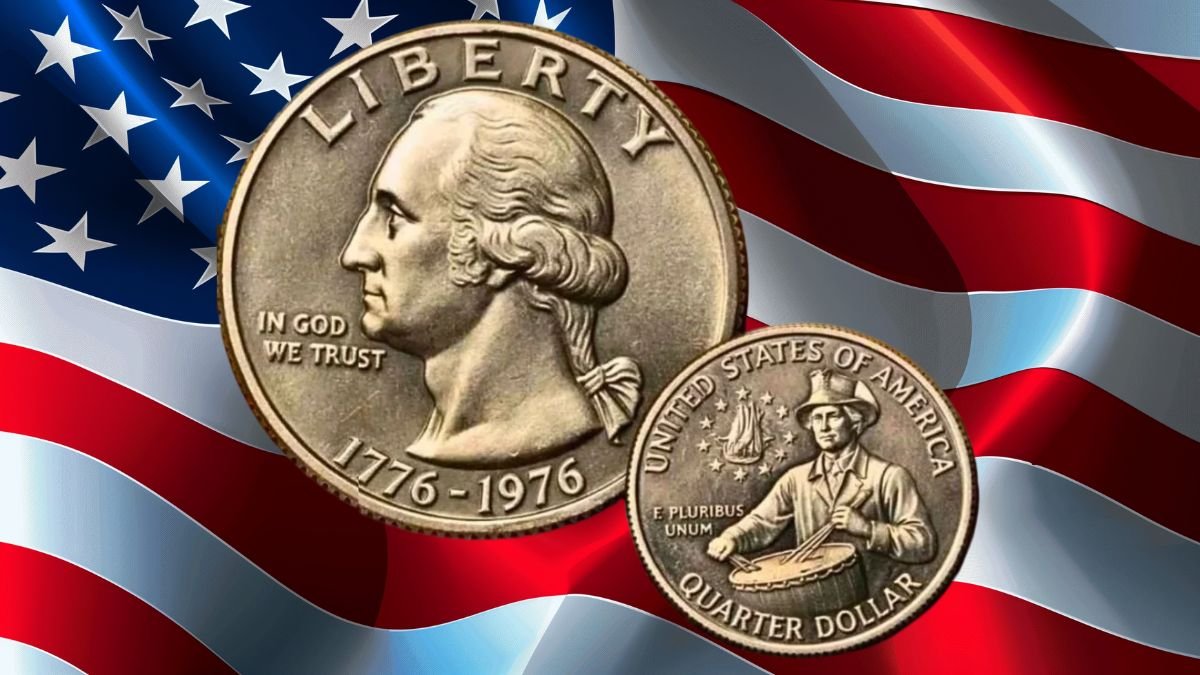
Bicentennial Quarter Value in 2026: The 1976 Bicentennial Quarter holds a remarkably special place in the history of American coinage. This coin was issued to commemorate the completion of 200 years of American independence; consequently, it features a unique design—distinct from that of a standard quarter—and displays the dual dates 1776–1976. Even today, this coin remains highly popular among collectors worldwide. As the year 2026 approaches, interest in these coins appears to be surging once again. In particular, rare variants, coins featuring minting errors, and those preserved in pristine condition can prove to be extremely valuable to collectors.
While it is true that the majority of Bicentennial Quarters remain common today—typically valued at around 25 cents—certain specific varieties and coins in excellent condition can fetch significantly higher prices in the market. This is precisely why coin collectors pay close attention to these pieces and meticulously examine their older coins.
What Makes the Bicentennial Quarter Special?
This coin was issued during 1975 and 1976, featuring a special design created to honor the 200th anniversary of American independence. The reverse side of the coin depicts a Colonial drummer—a soldier playing a drum—serving as a symbol of the troops who fought during the American Revolution. It is this distinctive design that sets it apart from a standard quarter.
These coins were produced at various mints and were struck using different compositions. Some coins were minted using a copper-nickel clad composition, while a limited number were produced in a silver composition. This distinction is the reason why the historical and collectible value of these coins has appreciated significantly today.
The Most Valuable Bicentennial Quarters
Not all Bicentennial Quarters hold the same value; certain specific types of these coins are considered far more significant by collectors. For instance, coins with a silver composition, “Proof” quarters, and uncirculated, high-grade coins remain in the highest demand.
If a coin possesses a clean surface, a clearly visible design, and minimal signs of wear, its value can be significantly higher. Often, such coins fetch substantial prices at auctions following professional grading. It is anticipated that the demand for these coins may surge even further around 2026, as that year will mark a significant historical anniversary.
The Rising Value of Coins with Minting Errors
The true value of a Bicentennial quarter often appreciates when it is found to contain a “minting error”—that is, a flaw that occurred during the manufacturing process. Examples of such errors include a doubled die, an off-center strike, a clipped planchet, or a misaligned die. These errors are not intentional but rather occur inadvertently during the minting process; consequently, such coins are considered extremely rare.
Collectors are highly enthusiastic about these error coins, and at auctions, their value can frequently range from hundreds to thousands of dollars. If an error coin is in excellent condition and features a clearly visible flaw, its market value can rise even higher.
Can Such Coins Still Be Found in 2026?
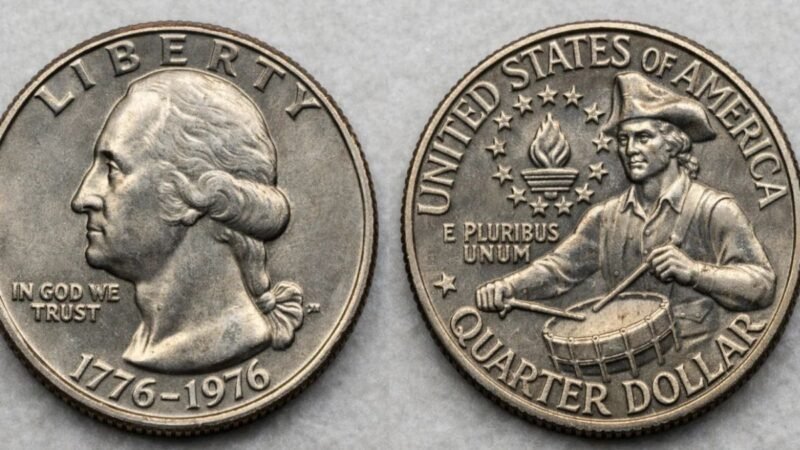
Interestingly, Bicentennial quarters can still be encountered in everyday transactions today. Since these coins were produced in vast quantities at the time of their release, many of the standard copper-nickel versions remain in active circulation. Although the majority of these coins are worth only their face value of 25 cents, one may occasionally stumble upon a coin in pristine condition or one containing a minting error.
For this very reason, many collectors obtain rolls of coins from banks to meticulously inspect them. This method remains a popular technique for discovering rare coins to this day.
Potential Value in 2026
The market value of a Bicentennial quarter varies depending on its condition and specific variety. Standard “clad” quarters found in general circulation typically range in value from approximately $0.25 to $1. If that same coin is in uncirculated, high-grade condition, its value can range from $5 to $20.
Coins with a silver composition can generally fetch between $8 and $30, while Proof quarters may be valued at $10 to $40. Furthermore, if a coin features a significant minting error, its value could soar to $100, $1,000, or even higher.
Why is a Coin’s Condition Important?
A coin’s condition plays the most critical role in determining its value. If a coin appears brand-new—with minimal scratches and a crisp, clear design—its value can be significantly higher. Conversely, heavily worn coins typically command a lower price.
For this reason, collectors advise that if you come across a potentially valuable coin, you should handle and store it securely, and consider having it professionally graded if necessary.
Should You Hold Onto Them Until 2026?
Many collectors believe that holding onto specific Bicentennial quarters until 2026 could prove to be a sound decision. Interest in such coins tends to surge around historical anniversaries, which can drive up their market value. However, if one possesses a rare coin that is currently in high demand within the market, selling it now could also yield a handsome profit.
Conclusion
The 1976 Bicentennial Quarter continues to hold a special significance in the world of coin collecting today. Its historical importance, unique design, and the potential for discovering minting errors make it a highly attractive item for collectors. While the majority of these coins may hold only nominal value, with the right knowledge and careful inspection, one might just uncover a coin worth far more than anticipated. Therefore, taking the time to carefully examine your old coins can sometimes prove to be a rewarding endeavor.
Leave a Reply