
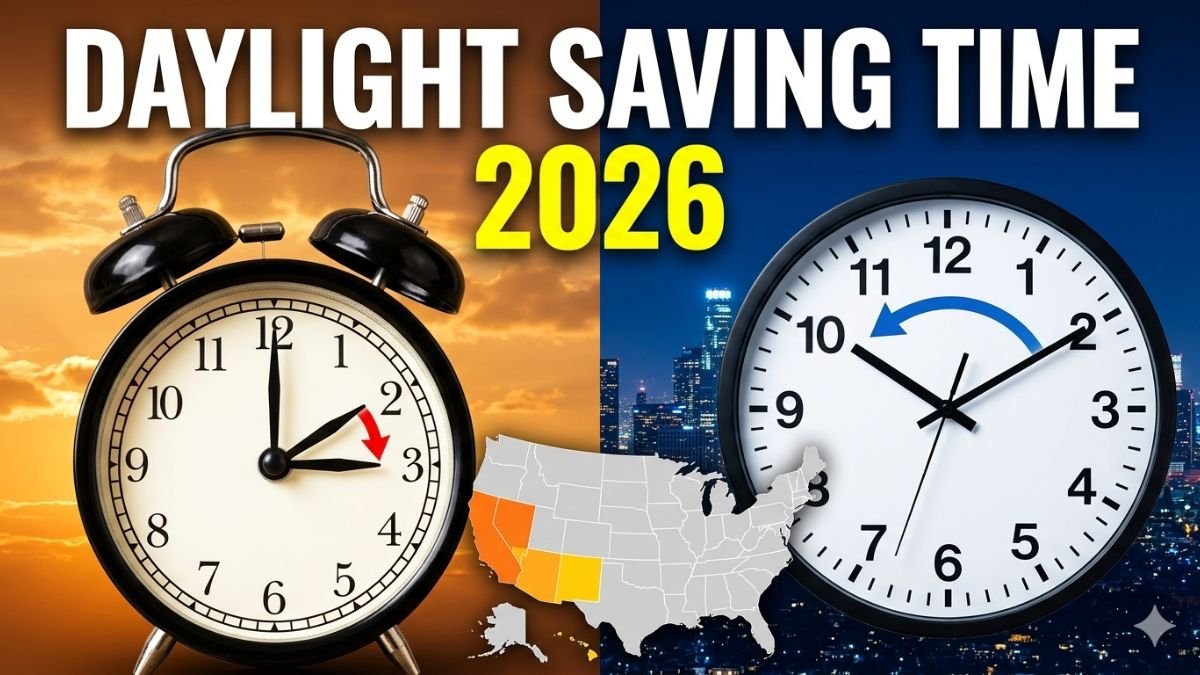
As is the case every year, Daylight Saving Time is set to go into effect in many countries in 2026. This is the period when clocks are advanced by one hour to ensure that daylight lasts longer into the evening. In 2026, this change will take effect on Sunday, March 8, starting at 2:00 AM.
At this time, clocks will be moved forward by one hour—a shift commonly referred to as “Spring Forward.” This means that people will get one less hour of sleep on that day; however, in exchange, they will enjoy natural daylight for a longer duration in the evening. As winter draws to a close and the spring season approaches, this transition allows people to experience longer days and slightly more daylight.
The days begin to gradually lengthen as early as February, signaling the imminent arrival of spring. Consequently, many people view Daylight Saving Time as a marker of the seasonal transition.
What is daylight saving time?
Daylight Saving Time (DST) is a system in which clocks are advanced by one hour during a specific portion of the year. Its primary objective is to maximize the utilization of natural daylight.
When clocks are moved forward by an hour, sunrise occurs slightly later in the morning, but the sun sets later in the evening. This allows people to benefit from natural daylight even after they have finished their work or studies.
This system was implemented in many countries with the aim of conserving energy and making daily life more convenient. However, over time, the system has also become the subject of various debates and discussions.
Where is Daylight Saving Time not observed?
Although Daylight Saving Time is observed across most parts of the United States, there are certain regions where it does not apply.
For instance, the practice of adjusting clocks forward or backward is not followed in Hawaii, American Samoa, Guam, the Northern Mariana Islands, Puerto Rico, and the U.S. Virgin Islands.
Similarly, Daylight Saving Time is not observed in most parts of the state of Arizona. These regions adhere to a single standard time throughout the entire year. The reason for this is often linked to geographical location and weather patterns, as in certain regions, there is minimal variation in the duration of daylight and darkness throughout the year.
Potential Health Impacts
Discussions surrounding Daylight Saving Time extend beyond merely the act of changing the clock; numerous studies have also been conducted to examine its effects on health. Some research suggests that the sudden shift in time can disrupt people’s biological clocks—that is, the body’s natural circadian rhythm.
A sudden reduction of one hour of sleep can be distressing for many individuals. Some health experts believe that this can exacerbate issues such as sleep deprivation, fatigue, and a decline in concentration.
Some studies have also observed a slight uptick in the number of road accidents during the days immediately following the commencement of Daylight Saving Time. Furthermore, certain studies have pointed to potential impacts on cardiovascular health and blood pressure.
For this very reason, several health organizations have called for a reconsideration of this system of time adjustment.
The Ongoing Debate Over a Permanent Time System
A long-standing debate regarding Daylight Saving Time has been unfolding in the United States. Some advocate for its permanent implementation to ensure extended daylight hours during the evening. Conversely, some experts argue that maintaining a single standard time throughout the year would be more beneficial for the body’s natural biological rhythm.
The American Academy of Sleep Medicine—an organization comprising sleep health experts—has also recommended the abolition of this time-shifting system. They contend that frequent changes to the clock can have a detrimental effect on people’s sleep patterns and overall health.
On the political front, too, this issue has been a subject of ongoing discussion. Attempts have been made—through various legislative proposals—to enact permanent daylight saving time; however, a definitive decision on the matter has yet to be reached.
For Now, Time Changes Will Continue.
Despite the numerous debates and proposals, the system of Daylight Saving Time is set to remain in effect for the time being. This means that in 2026, individuals will once again be required to set their clocks forward by one hour in March.
Following this adjustment, daylight will persist later into the evening, enabling many people to derive greater enjoyment from outdoor activities. Many individuals appreciate the opportunity to have extra daylight hours available for sports, walks, and other outdoor pursuits.
When Will Daylight Saving Time End?
Daylight Saving Time does not remain in effect throughout the entire year. It typically begins in the spring and concludes at the end of autumn.
In 2026, Daylight Saving Time will commence on March 8th and will come to an end on Sunday, November 1st, 2026. On that day, clocks will be set back by one hour—a shift commonly referred to as “Fall Back.”
Thus, the time on clocks changes twice a year: once in the spring, when they are set forward, and once in the autumn, when they are set back.
Conclusion
Daylight Saving Time is set to go into effect once again in March 2026, at which point clocks will be advanced by one hour. This will provide people with more daylight during the evening hours, though it may result in the loss of one hour of sleep.
Although debates regarding the health and social implications of this system are ongoing, the current arrangement is expected to remain in place for the time being. Therefore, if you reside in a region where Daylight Saving Time is observed, do not forget to set your clock forward by one hour on March 8th.
As the days grow longer and the weather begins to warm up, this shift will also serve as a signal of the arrival of spring.
Leave a Reply