
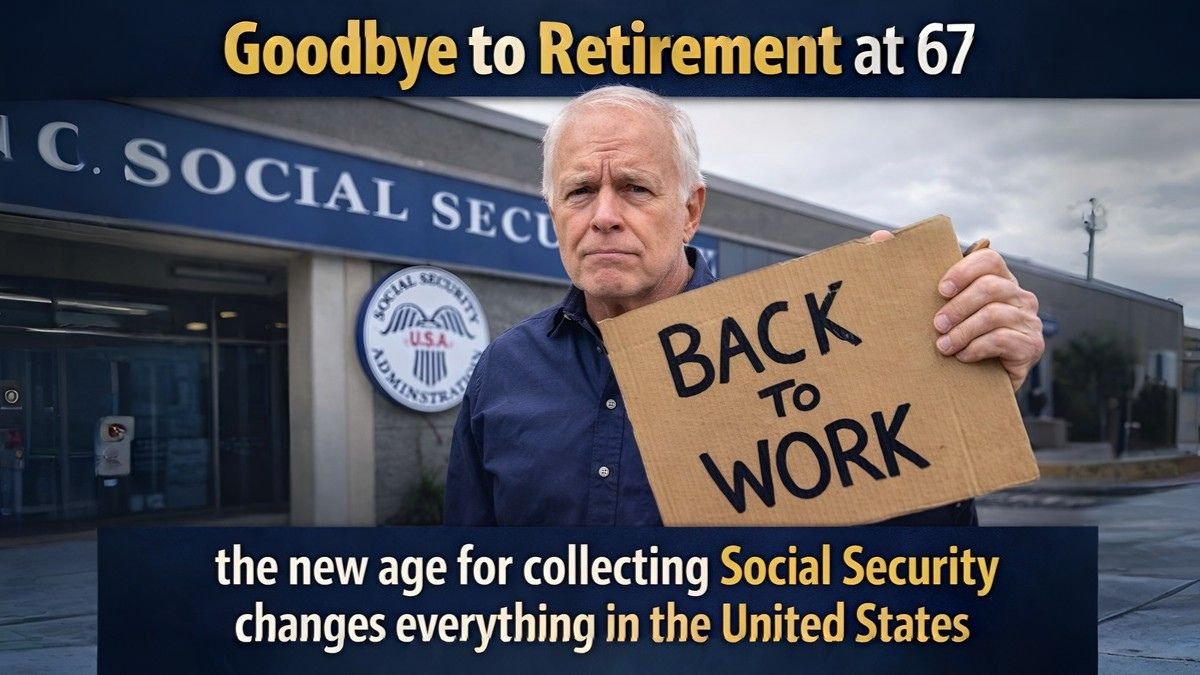
For decades, the idea of retiring at 67 has been deeply ingrained in the American mindset. It has symbolized a milestone—a point where years of hard work finally give way to rest, financial security, and personal freedom. However, recent changes to Social Security policies in the United States are beginning to reshape that long-standing expectation. The notion of retiring at 67 is no longer as clear-cut as it once was, and for millions of Americans, this shift represents a profound transformation in how they plan their futures.
The new age for collecting Social Security benefits is not just a technical adjustment. It reflects broader economic realities, demographic changes, and evolving government strategies aimed at sustaining the system for future generations. As life expectancy rises and the workforce landscape shifts, the traditional retirement timeline is being reconsidered, forcing individuals to rethink what retirement truly means.
Understanding the Evolution of Social Security
Social Security has long been one of the most important pillars of financial security in the United States. Established during the Great Depression, it was designed to provide a safety net for older Americans who could no longer work. Over time, the system has undergone several reforms to adapt to changing economic conditions and population trends.
Originally, the full retirement age was set at 65. However, as Americans began living longer and healthier lives, policymakers gradually increased the retirement age to 67 for those born in 1960 or later. This adjustment was intended to ensure the long-term sustainability of the program while still providing meaningful benefits to retirees.
Now, discussions and gradual policy shifts are signaling that even 67 may no longer be the standard benchmark. The new framework surrounding Social Security eligibility and benefit collection reflects a more flexible and, in some cases, delayed approach to retirement.

Why Retirement at 67 Is Being Reconsidered
The shift away from a fixed retirement age of 67 is driven by several critical factors. One of the most significant is increased life expectancy. Americans today are living longer than ever before, which means they rely on Social Security benefits for a longer period. This places additional strain on the system, requiring adjustments to maintain its viability.
Another major factor is the changing ratio of workers to retirees. In previous generations, a larger workforce supported a smaller retired population. Today, that balance has shifted. Fewer workers are contributing to Social Security relative to the number of beneficiaries, creating financial pressure on the program.
Economic conditions also play a role. Rising healthcare costs, inflation, and shifts in employment patterns have made it more challenging for individuals to rely solely on Social Security for retirement income. As a result, policymakers are encouraging longer workforce participation and later retirement.
The Impact on American Workers
For the average American worker, the evolving Social Security landscape brings both challenges and opportunities. On one hand, the idea of working beyond 67 can be daunting, especially for those in physically demanding jobs. It raises concerns about health, work-life balance, and the ability to sustain long careers.
On the other hand, a later retirement age can lead to higher monthly benefits. Social Security rewards individuals who delay claiming benefits, offering increased payouts for those who wait beyond the traditional retirement age. This creates an incentive for workers to remain in the workforce longer, potentially improving their financial security in later years.
The shift also encourages a more personalized approach to retirement planning. Instead of adhering to a fixed age, individuals are now considering a range of factors, including their health, savings, career goals, and lifestyle preferences.
Redefining Retirement in Modern America
The concept of retirement itself is undergoing a transformation. For many people, retirement is no longer a complete withdrawal from the workforce. Instead, it is becoming a gradual transition, often involving part-time work, consulting, or pursuing passion projects.
This new perspective aligns with the changes in Social Security policy. By moving away from a rigid retirement age, the system acknowledges that individuals have diverse needs and circumstances. Some may choose to retire early and accept reduced benefits, while others may continue working into their 70s to maximize their income.
Technology and remote work have also contributed to this shift. Older workers now have more opportunities to remain active in the workforce without the physical demands of traditional jobs. This flexibility allows them to maintain financial stability while enjoying a more balanced lifestyle.
Financial Planning in the New Era
As the retirement landscape evolves, financial planning becomes more important than ever. Individuals can no longer rely solely on Social Security as their primary source of income. Instead, they must adopt a comprehensive approach that includes savings, investments, and alternative income streams.
Understanding the new Social Security rules is a crucial part of this process. Knowing when to claim benefits, how they are calculated, and how they interact with other sources of income can significantly impact long-term financial outcomes.
Financial advisors are increasingly emphasizing the importance of early planning. Starting to save and invest at a younger age provides greater flexibility later in life, allowing individuals to adapt to changes in retirement policies without compromising their quality of life.
The Broader Economic Implications
The shift in Social Security age does not just affect individuals—it has far-reaching implications for the entire economy. A workforce that remains active for longer can contribute to economic growth, increased productivity, and a more stable tax base.
However, it also raises important questions about job availability and workplace dynamics. As older workers stay employed longer, younger generations may face increased competition for certain roles. This highlights the need for policies that promote job creation and skill development across all age groups.
Additionally, industries such as healthcare, insurance, and financial services are likely to experience significant changes as they adapt to the needs of an aging population. These sectors will play a key role in supporting individuals through longer and more complex retirement journeys.
Challenges and Concerns
Despite the potential benefits, the move away from retirement at 67 is not without its challenges. One of the primary concerns is inequality. Not all workers have the same ability to extend their careers. Those in physically demanding or lower-paying jobs may find it difficult to work longer, putting them at a disadvantage.
Health issues also become more prominent with age. While some individuals remain active and healthy well into their later years, others may face limitations that make continued employment difficult. This creates a need for more flexible and inclusive policies that address the diverse needs of the population.
There is also a psychological aspect to consider. Retirement has traditionally been seen as a reward for years of hard work. Changing that expectation can create uncertainty and anxiety for individuals who have planned their lives around a specific timeline.

Looking Ahead: The Future of Retirement
As the United States continues to navigate these changes, one thing is clear: the future of retirement will be more dynamic and individualized than ever before. The idea of a one-size-fits-all retirement age is gradually being replaced by a more flexible approach that reflects the realities of modern life.
Policymakers, employers, and individuals all have a role to play in shaping this new landscape. By embracing change and adapting to new circumstances, it is possible to create a system that provides both financial security and personal fulfillment.
The end of retirement at 67 does not mean the end of retirement itself. Instead, it marks the beginning of a new era—one where individuals have greater control over their futures and more opportunities to define what retirement means to them.
Conclusion
The shift away from a fixed retirement age of 67 represents a significant moment in the evolution of Social Security in the United States. It reflects changing demographics, economic realities, and societal expectations, all of which are shaping the future of retirement.
While the transition may bring uncertainty, it also offers new possibilities. By understanding these changes and planning accordingly, individuals can navigate this new landscape with confidence and resilience.
Ultimately, the message is clear: retirement is no longer defined by a single number. It is a journey—one that is as unique as the individuals who embark on it.
FAQs
Q1. Is retirement at age 67 completely eliminated in the U.S.?
No, age 67 is still considered the full retirement age for many, but changes in Social Security policies are encouraging flexibility and later retirement options.
Q2. Can I still claim Social Security benefits before 67?
Yes, you can start claiming benefits as early as 62, but your monthly payments will be reduced compared to waiting longer.
Q3. Does delaying Social Security increase my benefits?
Yes, delaying benefits beyond full retirement age can significantly increase your monthly payments up to age 70.
Leave a Reply